
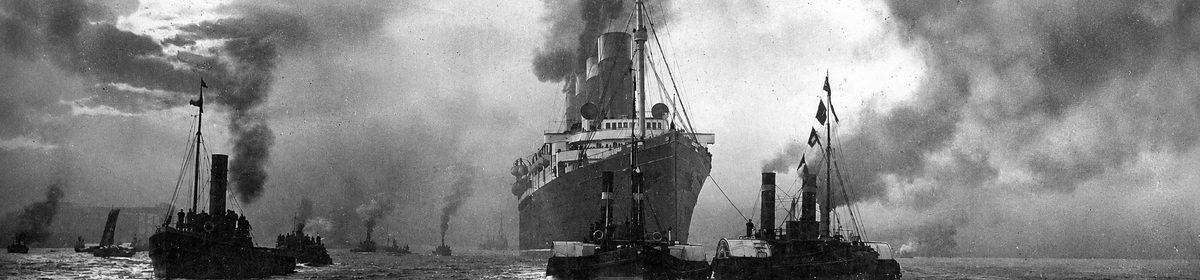

Yes, this is another sinking, but what the passengers found themselves in after the ship went down is something no one should ever experience. I said it in my Mark Twain post, and I can’t say it enough: maritime regulations are written in blood. The sinking of the SS Princess Alice is another painful reminder of that truth. It also reminds us that some disasters are made worse not just by what happens on the water, but by conditions that should have been addressed long before tragedy struck.
On September 3, 1878, the crowded passenger paddle steamer was returning to London after a day excursion along the Kent coast. Some children were asleep, and a band was still playing as the ship rounded Tripcock Point near dusk. Then the Princess Alice and the much larger collier Bywell Castle suddenly found themselves on a collision course.
The iron bow of the Bywell Castle struck the Princess Alice near her starboard paddle box. The smaller ship broke apart and sank in about four minutes. Passengers were in the water before many of them understood what had happened.
The investigations did not produce one simple answer. The coroner’s jury found that both vessels had contributed to the collision. The Board of Trade blamed the Princess Alice for failing to follow the proper navigation rule, while the High Court later held both ships responsible.
Although the Bywell Castle survived the collision, her crew immediately turned their attention to rescuing survivors from the Thames. They were joined by police, watermen, dock workers, and ordinary citizens who rushed to help. In disasters like this, history often remembers the ships, but it should also remember those who risked their own lives trying to save people they had never met.
The ship went down at the point where enormous amounts of untreated sewage and industrial waste from London entered the Thames. About an hour before the collision, nearby outfalls had released an estimated 75 million imperial gallons of untreated sewage, about 90 million U.S. gallons, into the Thames.
Survivors found themselves struggling not only in the water but in what contemporary accounts described as foul, polluted sludge. Some survivors who were pulled from the river later died after swallowing the polluted water. Several survivors who were pulled from the river later died from swallowing the sewage water. Between 600 and 700 people died. They didn’t keep a correct ship manifest, so the exact number is not known.
That tragedy had consequences far beyond the sinking itself. It shocked Victorian Britain and added urgency to efforts to improve London’s sewage and public health systems. In other words, the Princess Alice wasn’t just a maritime disaster; it became part of the story of modern sanitation.
The collision put hundreds of passengers into the Thames. Years of neglect made the river itself part of the disaster. After this, things started to change and raw waste would not go into the river. London built purification and treatment facilities directly at the existing Barking (Northern Outfall) and Crossness (Southern Outfall) pumping stations.


Discover more from Old Steam Ships
Subscribe to get the latest posts sent to your email.
Max, another example of when disasters drive change. World history contains some truly terrible events where catastrophes have shaken society out of complacency with its status quo. and necessary adjustments are made.
Yes there is…in this case…at least they listened. Not enough but listened.
The Thames may have been improved at that point, but today we still get a great many stories of our rivers being polluted in this way. Nearly 150 years on much still needs to be done.
I agree…we can’t just stop cleaning and trying.
Every time I read one of these tragic accounts, I ask myself “how is this possible?” There are so many questionable factors such as the timing of the release of raw sewage into the Thames, two ships rounding a bend at the same time in the still relatively early evening hours when visibility was not a major issue, a ship torn asunder and gone in 4 minutes, people struggling through and succumbing to noxious raw sewage. We cannot point to anything criminal (as was the likely case with the General Slocum), but this disaster was a horror show. The polluted waters would have been extremely difficult for anyone, but babies and children didn’t stand a chance. If they didn’t drown, they died shortly after from swallowing the poisoned water. Truly a nightmare.
Many of these I would not have believed if it was in a movie. It seems like more than not, no one gets the blame. I get that you cannot slam on the brakes in water…4 minutes is crazy. Thats why when some people thing “more lifeboats” will fix every problem…it doesn’t. There are many factors. Yes I do think enough is needed…dont’ get me wrong…but sometimes most go down with the ship.
Nancy, I can’t believe how many stories there are. I found 6 more this week and still have a ton in drafts.
Oh the water here…inexcusable to begin with…at least this started change.
Inexcusable …. that the perfect word for this, Max. It’s shocking how many of these tragedies there are, and each one has its own story.
Yes I totally agree. You can sometimes see small mistakes add up as one…some of them I understand. This? No, not a chance. I’m glad at least it pushed them to do something about it.
In disasters like this, history often remembers the ships, but it should also remember those who risked their own lives trying to save people they had never met.
In most of the stories you have posted, this is very true and I read the posts and marvel at the humanity. This post takes on a very different shade.
Again, Max. THANK YOU
Thanks Arthur…yes…to me they are just as big in the story. Many times they end up losing their lives trying to save people they don’t know.
Just when you think you read the worst possible scenario, you present us with this. Unimaginable is all I can say. You warned me last week and here it is, something I could not have dreamt in my worst nightmare. Those poor souls.
Yep…it’s bad enough that you are sinking, but to end up in that, is inexcusable.
In 1878, water treatment plants were vastly different from modern facilities, focusing almost entirely on improving clarity (reducing turbidity), taste, and odor rather than targeting invisible bacteria. While scientists were just beginning to establish the “germ theory” of disease, chemical disinfection had not yet been adopted. In 1878, the UK did not treat the sewer water dumped into the Thames, as they discharged raw, untreated sewage directly into the river. Sir Joseph Bazalgette’s massive Victorian Great Stink sewer network successfully diverted waste away from central London, but it simply relocated the raw outflow further down the river at Barking and Crossness. Pumping stations released roughly 75 million gallons of fermenting, untreated human waste directly into the tidal flow twice a day. At this time, no chemical or biological sewage treatment plants existed at the outfalls; the stations served only as collection and gravity-discharge points. When the paddle steamer Sinking of SS Princess Alice collided on the Thames in September 1878, hundreds of passengers died not just from the crash, but from ingesting the highly toxic, raw-sewage-filled water. The horrific conditions exposed by this disaster finally forced authorities to begin planning basic settling tanks and downstream barge transport in later years.
It was bad enough to sink…but then to end up ingesting that water that killed many of them was just awful. I’m glad this at least started them in the right direction of slowly cleaning it up. Yes…they transported “sludge” away after it was separated…I believe that is right Jim. Thanks for reading Jim.
very interesting and another one I’d never heard of. It’s terrible. It’s also shocking to me , for some reason, how many of these accidents you report happen right near a city and the shoreline. I’d always imagined that basically things like this would only happen in the wide open sea or a Great Lake, miles from anywhere.
Great point about the hazards of the polluted water and I suppose one could say ‘for the greater good’. It’s good that they started to try to do something to clean the water right after. Much like how it took that killer fog/smog in London in the ’50s which killed hundreds to get them to start to scale back on coal plants and work to clean up the remaining ones. I say ‘they’ but I don’t think North America is much better in being proactive when it comes to environmental issues that need addressing.
I have one coming up that happened on the Canadian coast… off the top of my head… around 100-200 feet away from land. But this…this is in another league….because of the city’s lack of sanitization.
Like I’ve been saying to others…it’s bad enough you were on a sinking ship…damn…you didn’t need this when you got into the water….or sludge as it was. I’ve read where more people died ingesting the sewage than drowning…just horrible. But at least they did something this time.
It’s always room for improvement…always.
Unimaginable two ships ran into each other in daylight with good weather conditions. Sunk in 4 minutes 🙁 That any survived, particularly while floundering in raw sewage, is a wonder. I think that dumping of raw sewage into waterways happened/happens all over the globe. The river that runs through Chicago, which has been reversed to flow upriver, is a giant sanitary/sewage canal.
It was just awful…I would imagine one or both were going too fast and once you are going…it takes so long to stop. It seems like the number one cause of these collisions was fog…and still is to a point…but this was crazy.
This one was just inexcusable…. yes, I’m sure there are some that are really bad still. Thanks for reading as always Lisa.
And we can’t forget the Cuyahoga thru Cleveland, so polluted and toxic it caught fire. More history I only learned because of REM songs, believe it or not!
LOL…yes rock and roll can teach! See mom!
You are welcome, Max. I’m learning a lot in these ships posts.
A sign of the times. Lives sacrificed for the change.
Yea…a hell of a price but at least they started to clean up.
Gross! 🤢 How awful for them.
Yes it was…I can’t believe they allowed that much to go on. It’s bad enough sinking…then that.
Thanks again Max. These nightmares do need to have the light shone on them. They are history, but we MUST learn from them, and at least it gave those in power back then a kick-start to change. (Small mercies.)
The Thames was basically an open sewer, so what chance would you have, thrashing around in that, even if you survived the crash AND could swim? I imagine not many people would be adept at swimming back then?
What is it about us humans? Technology-wise we want to run before we can walk. There’s no standing around to reflect on the journey we’re on, or as in the case of AI, where it’s taking us? Sorry Max, waxing philosophical here, and I don’t know enough, so I’ll shut up!
But, as in the past, we seem experts in crapping royally in our own nests at times.
This one surprised the hell out of me. That many millions of gallons…which ever measurement you use…
You are right…not many could swim. They didn’t have the neighborhood or community pool. Plus…a woman wearing those clothes they wore? They sank like a rock. You get off the damn ship…then you ingest poison basically and die.
It’s not our nature to learn at times…or it takes more than 2-3 times.
I had to work with AI today…I asked it…you are not skynet or HAL are you? I just hope people start learning…it’s not AI I’m worried about as much…it’s the people using AI…
Yep, with AI I just have my basic human response and antipathy to cold hard facts and calculations. AI can’t rationalise the fact that I have and swear by my lucky number 11 or why I like green better than blue! Or… maybe It can… (Cue spooky Twilight Zone music!)
No it can’t…it has it’s limits. The information has always been out there…with what people are scared of. But no…I agree. It has it’s limits….I don’t see it as HAL or Skynet… at work today…I caught it being wrong on problems I was working with it with…so it’s not perfect by any means.
Here’s my story, Max:
https://theelephantstrunk.org/2026/09/19/ss-princess-alice-the-river-remembers/
What a horrendous tragedy so many lives lost and the people who tried to save lives dying because of the pollution- unbelievable- thanks for the post Max ❤️
I thought I saw it all before this one. Never did I think that escaping a sinking ship would be the easiest part of living…then you had to go through the sludge! Thank you for reading!
That is an unfortunate place to sink, making me dry retch.