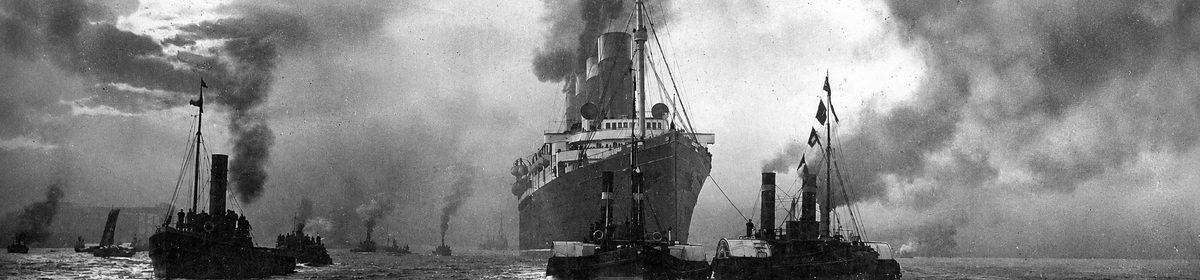
SS Île de France: The Saint Bernard of the Seas

My kind of ship! She earned this title due to her numerous rescue operations at sea. This was one beautiful ship and is remembered for all the right reasons. What a time for ocean travel. It was effectively the “jet-set” before the jet. The ocean liners took people across the ocean in style. Celebrities would ride them back and forth, much like seventies rock stars did on jets, to be with their famous friends and have new adventures. So today we will take a look at a great ocean liner that was a hero to many.

The SS Île de France was one of the great French ocean liners of the 20th century. Built for the French Line, she entered service in 1927 and quickly became known for something other than speed records. While ships like the White Star liners and Cunard’s express liners competed for the Blue Riband (an unofficial award for the fastest crossing of the Atlantic), SS Île de France became famous for her elegance, Art Deco interiors, and later, her remarkable rescue work at sea. Passengers loved her modern style, and she helped establish France as a major player in transatlantic travel during the years between the World Wars.

When World War II began, her civilian career was interrupted. Like many liners of the era, she was converted into a troopship and carried thousands of soldiers during the conflict and traveled over 400,000 miles. After the war, she was extensively rebuilt and returned to passenger service in 1949. The postwar years were among her most successful. She once again carried travelers between Europe and North America and became one of the most recognizable ships on the Atlantic.

In 1953, she rescued the crew of the Liberian freighter Greenville, getting 25 out of the 26 crewmen. Her finest hour came in July 1956 after the collision between the Italian liner SS Andrea Doria and the Swedish liner MS Stockholm. Upon receiving the distress calls, Île de France altered course and rushed through the night toward the disaster scene. Her crew worked tirelessly to take hundreds (over 750) of survivors aboard from lifeboats. In total, she rescued more people than any other ship involved in the operation. The sight of her brightly illuminated sign arriving out of the darkness brought hope to frightened survivors who had spent hours waiting on the cold Atlantic.

Because of that rescue, Île de France earned the nickname The Saint Bernard of the Seas; it was a fitting title. Long after her days as a luxury liner were forgotten, people remembered how she answered the call when it mattered most. She remained in service until 1959, when she was retired and eventually scrapped, but her legacy lives on as one of the great rescue ships in maritime history. Celebrities also loved this ship. Bogart and Bacall, Joan Crawford, Errol Flynn, Alan Ladd, Lena Horne, Rita Hayworth, Ernest Hemingway, Marlene Dietrich, and more. One more I will add selfishly because he is my favorite filmmaker…Buster Keaton.

In November 1934, comedian Buster Keaton returned from Europe aboard the Île de France. Keaton had traveled overseas to make the French film Le Roi des Champs-Élysées at a time when Hollywood had nearly discarded him. He reportedly crossed to Europe aboard a freighter to save money, but he came home in considerably better style. During the return crossing, Keaton even demonstrated his famous ability to escape from a straitjacket.

After she retired from passenger service, part of her final career was in the 1960 film The Last Voyage. The producers needed a large ocean liner that was about to be scrapped so they could stage realistic scenes of a ship in distress. The Île de France fit the bill.

However, there was one catch. The owners did not want the famous French liner portrayed as sinking on screen. So the filmmakers changed the ship’s identity for the movie. They painted over her name and transformed her into the fictional liner Claridon. During filming, they flooded compartments, smashed interiors, and staged explosions and damage to the once great ship.

If you see some pictures of her with 3 funnels and then two, there is a reason. After the war, when she was restored to an ocean liner, she went from 3 funnels to two shorter ones.

RMS Lusitania: The Sinking Felt Around the World

I first heard of the Lusitania on an episode of The Twilight Zone. Long before I knew the details of her story, I knew the name. That’s probably true for a lot of people. Along with the Titanic and the Edmund Fitzgerald, the Lusitania has become one of the few ships recognized far beyond maritime history. The sinking of this ship changed the world. It wasn’t the reason America got into WWI, but it helped by changing attitudes at the time. This ship was known for its speed and comfort. This was the Cunard Line’s flagship, just as the Olympic was the White Star Line’s. I think of some of these ships as works of art. I hate that she gets remembered for sinking. She was a glorious ship and probably the most famous of her day. She and her sister, RMS Mauretania were household names.

I wanted to post this ship’s story much earlier, but it’s so complex that I ended up reading a book for more information: Lusitania: Triumph, Tragedy, and the End of the Edwardian Age by Penny Wilson and Greg King (I would highly recommend). I’m going to have a companion page with this post and others. I wanted a place where I could list some very interesting stories and not make this post a novel. So you, the readers, could have a choice if you wanted to read more or not.

The RMS Lusitania was one of the great ocean liners of the early 1900s and of all time. She entered service in 1907 and quickly became famous for her speed and luxury. At the time, she was one of the fastest ships in the world. Wealthy passengers loved her grand dining rooms and first-class accommodations, but she also carried immigrants and regular travelers crossing the Atlantic. When World War I began in 1914, Britain started using large passenger liners to help the war effort.

She was a tough ship. In January 1910, Lusitania showed just how tough she was. While crossing the Atlantic in a violent storm, an enormous wave struck the ship head-on and swept over her bow. The water reached the bridge, smashing windows and damaging the wheelhouse and other parts of the ship. For passengers watching the bow disappear beneath the sea, it must have been terrifying. Lusitania came back up, however, and after temporary repairs she continued to New York at reduced speed. Five years before her sinking, the Atlantic had already given the ship one enormous test, and she survived it.

Germany warned that ships sailing into British waters could be attacked because Britain was blockading Germany with its navy. On May 1, 1915, the Lusitania left New York for Liverpool with nearly 2,000 passengers and crew aboard. Many Americans were nervous because Germany had printed warnings in many newspapers that British ships could be targeted by submarines. Still, most passengers believed a civilian liner would never be attacked. On the afternoon of May 7, 1915, near the southern coast of Ireland, the German submarine U-20 (companion page with info on the U-20) fired a torpedo into the Lusitania. A second explosion followed inside the ship, still debated by historians today. The liner began to list heavily and sank in only about 18 minutes. Lifeboats were difficult to launch because of the sharp angle of the deck. 1198 people died, and only 762 survived. Only 289 bodies were ever recovered from the sea, and a large portion of them were never identified. It has been reported that the British government carried approximately 4.2 million rounds of rifle ammunition, 5,000 cases of shrapnel artillery shells, and non-explosive military fuses in the Lusitania’s cargo hold. While officially registered as a passenger liner, the ship was also legally classified as an armed auxiliary cruiser and received government construction subsidies

The notice in the newspapers.

The sinking shocked the world. Newspapers were filled with stories about families lost at sea and survivors struggling in the freezing water. Germany argued that the Lusitania was carrying war supplies, which later investigations showed was partly true because rifle cartridges and other military materials were aboard. Still, much of the public viewed the attack as the destruction of a civilian passenger ship filled with innocent people. The sinking created enormous anger in the United States. At first, America did not enter the war, but anti-German feeling grew stronger after the disaster. The Lusitania quickly became a symbol on posters and in newspapers to encourage support for the Allied side.

The ramifications of the sinking lasted for years. Germany temporarily reduced unrestricted submarine warfare because of worldwide outrage. But by 1917, Germany resumed attacking ships without warning, helping push America into World War I. Many historians believe the sinking of the Lusitania changed American public opinion and slowly moved the country closer to entering the war.

In her 8-year career, she traveled around 650,000 to 700,000 miles. She completed 101 round-trip Atlantic crossings. One tragic, interesting story involved Canadian Frances Stephens (Companion Page). Please read this brief story if you can. The year before, the U-boat would have stopped the ship, inspected the cargo, let people off the ship, and then sunk her. It was called “prize rules” or “cruiser rules.” On a dive this century, the divers found Remington .303 caliber bullets. As many as 2.4 million rounds were on the ship’s manifest.

Now I want to recognize some of the people who were, in my eyes, heroes.

Alfred Gwynne Vanderbilt: A wealthy American businessman who gave his life jacket to a mother with an infant and helped others into lifeboats. Alfred could not swim and died in the icy water, and his body was never recovered. Leslie Noel Morton & Joseph Parry: Two young British seamen showed immense bravery. They jumped into the ocean to reach a drifting lifeboat, ripped off its cover to rescue dozens, and went on to save around 50 people from the water. Both survived and were awarded the Silver Board of Trade Medal for Gallantry. Ian Holbourn: A Scottish author who took a young passenger, Avis Dolphin, under his wing when the ship was struck. He guided her to safety, giving up his own life belt for her. Ian and Avis survived and remained lifelong friends. Lindon Bates, Jr.: An American passenger who selflessly gave his life jacket to a frightened female passenger and stayed on the sinking deck to search for lost children before going down with the ship. Thomas Woods: A brave Manx fisherman from the Isle of Man who was fishing nearby on his small boat. Seeing the disaster unfold, he and his crew were the first to arrive on the scene and successfully pulled about 150 survivors from the water.

Every great ship is a product of the knowledge available when she was built. Engineers don’t know what future disasters will be. Almost every major maritime tragedy has taught the next generation of designers something new.

The sinking of the Lusitania inspired writers and musicians for decades. One of the most interesting was Woody Guthrie, who later sang ‘When That Great Ship Went Down,’ telling the story through the eyes of those aboard. If you’re interested in the song, I’ve written about it on Power Pop.

When you REALLY have time…it’s worth a watch!

SS Eastland: Chicago’s Forgotten Disaster

This was one of the tragic shipwrecks, and it happened while she was still 20 feet from the dock. That makes it all the more sad. As we will see, the ship should not have been allowed to carry passengers because of a problem she had all along. She had a narrow hull and concrete decks, which made her top-heavy, especially after lifeboats were added after the Titanic disaster. It reminds me of the sinking of the RMS Empress of Ireland. It was so fast that no one had time to adjust.

The passenger steamer SS Eastland was built in 1903 and spent most of her career carrying immigrants and excursion passengers on the Great Lakes. She was not a large ocean liner, but she could carry thousands of people on short trips. From the beginning, however, the ship developed a reputation for being unstable. Captains and crew members reported that she tended to list from side to side, especially when heavily loaded. Several incidents occurred during her early years where cargo had to be shifted or passengers moved to correct dangerous leans. Imagine that, ok, everyone, shift to the left, we are leaning too far. Don’t worry, we are fine.

The problems became worse after the Titanic disaster in 1912. New safety regulations required ships to carry enough lifeboats for everyone aboard. While the new rules were well-intentioned, the added weight of lifeboats, rafts, and equipment was placed high on the SS Eastland. Since the ship already had stability problems, the extra weight made matters worse. Those lifeboats weighed a little over a ton each. Engineers and inspectors believed the vessel was safe, but concerns about her tendency to lean never completely disappeared.

On July 24, 1915, the Eastland was tied to a dock on the Chicago River. More than 2,500 employees of the Western Electric Company and their families were boarding for a company picnic in Michigan City, Indiana. As passengers crowded aboard, the ship began to lean first one way and then the other. Crew members tried to correct the problem by moving people and adjusting ballast tanks, but it was too late. At approximately 7:30 a.m., the ship rolled onto its side while still tied to the dock. The disaster happened so quickly that many passengers were trapped below decks. In the end, 844 people lost their lives, making it one of the deadliest maritime disasters in American history.

What makes the Eastland tragedy especially haunting is that it happened only a few feet from shore. Rescue workers, police officers, and ordinary citizens rushed to help, but many passengers were trapped inside the overturned vessel. Investigations followed, but no single person was ultimately held responsible. Historians still debate whether the disaster was caused by poor design, added lifeboat weight, management decisions, or a combination of factors. Today, the Eastland is remembered as one of Chicago’s greatest tragedies and a reminder that even a ship sitting safely at a dock can become a disaster when stability problems are ignored.

Some of the people who pitched in and helped. George Halas, long before he became the founder of the Chicago Bears, Halas was a young employee of the Western Electric Company. He was supposed to be aboard the Eastland that morning, but arrived late after being assigned another task. Instead of being a victim, he spent the day helping rescue survivors and recover bodies from the river. He later said it was one of the most horrifying things he had ever witnessed.

Captain Harry Pedersen and the crew of the nearby tugboat Kenosham rushed to the scene. They helped pull passengers from the water and cut into parts of the overturned ship to reach trapped survivors. Several tugboat crews from the Chicago River did the same thing. They acted immediately, often without any regard for their own safety. The Chicago Fire Department, police officers, and ordinary citizens also played a major role. Many people were trapped inside rather than thrown into the river. Rescuers used axes, cutting torches, ropes, and ladders to break into the hull. Some worked for hours in dark, flooded compartments searching for survivors. Others performed first aid on the docks as victims were brought ashore.

Tugboat crews, firefighters, police officers, doctors, nurses, and ordinary Chicago citizens all jumped into action. The ship capsized in only a few minutes, but the rescue effort continued for days. It is one of those moments where you see the worst of a tragedy, but also the best of people.

Some disasters are remembered because people had impossible choices. Others are remembered because people had almost no time to make any choice at all.

Next week, we will be diving into one of the most infamous and complex shipwrecks of all time.

SS Daniel J. Morrell: A Ship Chasing Its Survivor

Imagine you’re on the 60-year-old SS Daniel J. Morrell. It’s dark early morning on the Great Lakes. The wind is blowing nearly 70 mph, the waves are reaching 20 to 25 feet, and your ship is breaking apart beneath your feet. You somehow make it onto a life raft. Cold, soaked, exhausted, and alone in the darkness, you suddenly see lights in the distance. Relief washes over you. A ship is coming to rescue you. You’re going to live!

Then the unthinkable happens.

You realize those lights aren’t on a rescue ship at all. They’re on the bow of the Daniel J. Morrell, the very ship that had just sunk beneath your feet! The ship had broken in two, and the bow was still steaming toward you through the darkness. It sounds like something from a horror movie, but it really happened. That is exactly what the lone survivor experienced.

I’m very wary of these kinds of ships. The Edmund Fitzgerald, the MV Derbyshire, the SS Carl D. Bradley, and the rest of these long and narrow cargo ships. Now, I’m not an engineer or anywhere near it, but they look so unnatural. In calm seas, they are fine, but when a storm comes up, they are punished severely for being so long and narrow, and many have broken in two. They also have many cargo holds, and if they aren’t completely sealed, water can come in and start weighing the ship down. But I must also say, to be fair, that some of those ships have operated for over 60 – 100 years! So, who am I to question?

The SS Daniel J. Morrell was one of the most respected ships on the Great Lakes. Built in 1906, she was considered a modern vessel for her time and spent decades hauling bulk cargo across the lakes. At 603 feet long, she was among the largest ships on the Great Lakes when launched. Crews regarded her as a strong ship, and she earned the nickname The Queen of the Lakes. By the 1960s, however, she was showing her age. Like many older lake freighters, she continued working long after newer ships had appeared.

On November 29, 1966, the Morrell was caught in a powerful storm on Lake Huron. During the night, the ship began to experience severe stress from the waves. Then the unthinkable happened. The vessel broke in two. The bow section separated from the stern and continued moving through the darkness. The crew had almost no warning. Men scrambled to launch life rafts and lifeboats into freezing conditions that offered little chance of survival.

Only one man survived, crewman Dennis Hale. After escaping onto a life raft, he spent hours exposed to the cold while watching one of the strangest and most disturbing sights imaginable. In the darkness, he saw what appeared to be a ship approaching. For a moment, he thought rescue had arrived. Then he realized the terrible truth. The vessel moving toward him was not a rescue ship at all. It was the bow section of the Daniel J. Morrell, still floating and moving on its own after breaking away from the rest of the ship. Few survivors in maritime history have experienced a more haunting moment.

By the time rescuers arrived, Hale was the only member of the 29-man crew left alive. Investigators later determined that age, metal fatigue, and the tremendous forces of the storm had contributed to the breakup. The disaster shocked Great Lakes shipping and raised concerns about the condition of older freighters still in service. It also foreshadowed later losses such as the SS Edmund Fitzgerald. The image most people remember, however, is not the investigation or the wreck itself. It is Dennis Hale alone on a raft in the darkness, believing help was finally coming, only to discover he was looking at the broken remains of his own ship steaming toward him.

Reader halffastcyclingclub added this in a comment. Years later, Dennis Hale wrote about more than just his physical survival. While alone on the raft, he said he saw dead shipmates and was visited by a stranger who warned him not to eat the ice from his coat because it would lower his body temperature even further. Shortly after his rescue, Hale told a priest about these experiences but was discouraged from speaking about them again. For years he largely kept that part of the story to himself. Hale later said that finally talking openly about what happened aboard the Daniel J. Morrell, and the survivor guilt that followed him, became an important part of his healing. He eventually told the full story in his autobiography, Shipwrecked: Reflections of the Sole Survivor.

SS Edmund Fitzgerald: The Mighty Fitz

I think some of the best stories come from the Great Lakes, both good and bad. Looking back, I’m so glad that Gordon Lightfoot wrote a song about this cargo freighter. Tragedies should get recognized, and hopefully, lessons will be learned from them. I learned about it at 9 years old with the song. Without that, I probably never would have known about her. Because of the song, she is remembered along with the Lusitania and Titanic. But, unfortunately, she will not be the last cargo freighter we will see. The Great Lakes have taken many of them before and after.

She was a steamship. The SS means “Steam Ship” or “Screw Steamer.” The word “Screw” means the propellers; that is what they were called. In fact, the steamships had warnings on the back of their ships, like below; the Titanic had one as well. They did this so tugboats and others would not follow too close and be sucked into their propellers. For those who think steamships were only in the 1800s and early 1900s, there are some still in operation today.

She was launched in 1958 and quickly became one of the most famous ships on the Great Lakes. At 729 feet long, she was the largest ship on the lakes at the time and carried taconite iron ore from Minnesota to steel mills around the lower lakes. Her crews respected her. She had a reputation as a dependable ship and often set cargo records. For years, she worked without major incident and became something of a celebrity among Great Lakes sailors and ship watchers. Her nickname was The Mighty Fitz. She was huge, a little over two American football fields long.

That changed on November 10, 1975. The Fitzgerald left Superior, Wisconsin, loaded with ore pellets and headed toward Detroit. She was sailing with the freighter SS Arthur M. Anderson when both ships encountered one of the worst storms ever recorded on Lake Superior. Winds reached hurricane force, and waves climbed to enormous heights. During the evening, the ship reported damage and problems taking on water. Then, at about 7:10 p.m., she suddenly disappeared from radar. No distress call was sent. All 29 crew members were lost.

The exact cause of the sinking is still debated. Some believe the ship struck a shoal and suffered fatal damage. Others think huge waves overwhelmed her, or that structural problems weakened the hull. Investigations have never produced a single answer that everyone agrees upon. The wreck was discovered on November 14, 1975, resting in two large sections on the bottom of Lake Superior, about 530 feet down. Over the years, she became more than a shipwreck story. She became a symbol of the dangers faced by Great Lakes sailors. It is estimated that 6,000 to 10,0000 shipwrecks are in the Great Lakes, with over 30,000 souls lost. That figure is staggering to me.

After the wreck was found, divers eventually recovered the Fitzgerald’s bronze bell. In 1995, a memorial service was held where the original bell was replaced on the wreck with a replica. During the ceremony, the names of all 29 crew members were read aloud, and the bell was rung once for each man. It wasn’t about the ship anymore. It was about making sure the crew would never be forgotten.

The tragedy might have remained known mainly around the Great Lakes if not for Gordon Lightfoot. While he was reading a magazine article about the sinking, Lightfoot was struck by how little attention the crew seemed to receive outside the region. He felt the men deserved to be remembered as people, not just as part of a disaster. In 1976, he wrote and recorded the song, and it became one of his biggest hits and introduced millions of listeners to the story. Even today, many people first learn about Fitzgerald, like I did, through Lightfoot’s song. That helped ensure that the crew and their ship would never be forgotten.

When the Fitzgerald failed to arrive at Whitefish Bay, wives and children were simply waiting for their husbands and fathers to come home from another routine trip. Most Great Lakes voyages ended without incident. These were the twenty-nine men who sailed aboard the Edmund Fitzgerald on her final voyage. More than fifty years later, they’re still remembered by their families, friends, and everyone who believes their story should never be forgotten. The 29 crew members who lost their life companion page.

Yep…it would not be complete without this

Pennsylvania Steamboat: Mark Twain Never Forgot

Those old riverboats were gorgeous and an important part of American history. They connected small towns and large cities at that time, much more than trains did in the mid-1800s. Trains were expanding, but boats had a longer reach. Many towns popped up along riverbanks and served as connections for western expansion. They acted as the closest hubs steam-powered boats could reach from civilization. Early trains were often considered less comfortable for long-distance passenger travel than the large, luxurious steamboats (sometimes called “floating palaces”) that operated on major rivers. Think about it: no highways or airplanes, and trains were not everywhere at this point.

The steamboat Pennsylvania was one of the large and fast riverboats that traveled the Mississippi River during the golden age of steam. Built in 1854, she carried passengers and cargo between cities such as St. Louis and New Orleans. Like many riverboats of the era, speed was important. Competition between boats was fierce, and owners wanted to make quick trips to attract more passengers.

The Pennsylvania is remembered today because of her connection to Mark Twain. Before he became a famous author, Samuel Clemens worked on the Mississippi River and learned the trade that would later inspire books such as Life on the Mississippi. In 1858, his younger brother Henry Clemens was working aboard the Pennsylvania as a clerk. Twain himself had helped Henry get the job, believing it would be a good opportunity for him.

On June 13, 1858, tragedy struck near Memphis. The Pennsylvania suffered a massive boiler explosion. The blast tore through the vessel and killed or injured dozens of people. Henry survived the initial explosion but was badly burned and injured. Twain rushed to his brother’s bedside, hoping he would recover. Instead, Henry died several days later from his injuries.

The loss haunted Twain for the rest of his life. He often wrote about the event and carried a sense of guilt because he had encouraged Henry to take the position aboard the riverboat. The disaster also highlighted a growing problem on America’s rivers. Boiler explosions were far too common during the early steamboat era, often caused by poor maintenance, faulty equipment, or the pressure to keep boats running fast. Today, the Pennsylvania is remembered not only as a Mississippi River steamer, but as the ship connected to one of the most painful chapters in Mark Twain’s life.

I’m reading Life on the Mississippi right now by Twain, and he goes over this horrible time in the book. In time, the boilers were made safer by rules and inspections, both of which had been invented only after several people had been hurt and killed. Before that, the river was a huge teacher, though her lessons were costly. Lifeboats were scarce, regulations were almost nonexistent. As Twain said at one point, passengers often entrusted their future to the judgment of men who possessed much more confidence than experience. By the 1900s, you rarely heard of a boiler explosion. I’ll say this again in future posts: maritime regulations were written with blood.