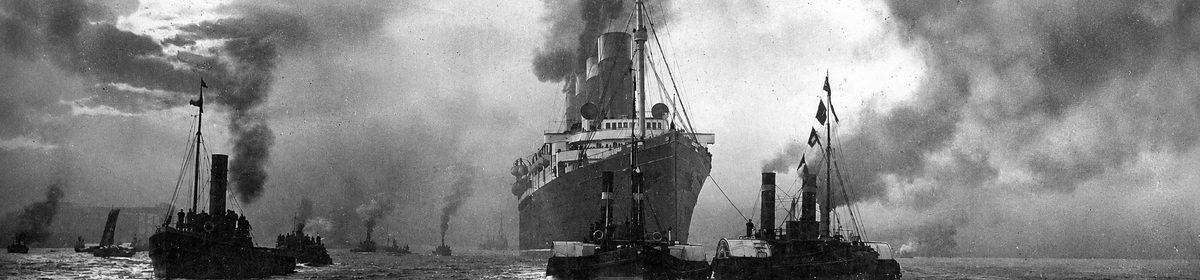
SS Normandie: The Most Beautiful Liner Ever Built

This may be the most elegant and well-designed ocean liner ever built. People could walk around her and simply stare. For me, not counting the Edwardian era (Olympic, Mauretania, etc.), the Normandie, SS United States, and Île de France are probably my favorite liners from the 1920s onward. I would still pick the Olympic for my tastes, but the consensus among “ship people” is that this ship had everything, and it’s hard not to agree. The French had some of the most beautiful ships.

I hope you don’t mind a lot of pictures. She deserves them.

The SS Normandie was France’s answer to the great ocean liners of the 1930s. She was launched in 1932 and entered service with the French Line in 1935. Four years before she began sailing, the SS L’Atlantique (more on her later) had already offered passengers a glimpse of the Art Deco future. The Normandie took those ideas and built an entire ship around them.

At 1,029 feet long, she was the first ocean liner to exceed 1,000 feet. Her hull was designed by Vladimir Yourkevitch, a Russian-born naval architect whose unusual bow helped the enormous ship move through the water efficiently. Her steam turbines did not turn the propeller shafts directly. Instead, they powered generators that supplied electricity to four enormous motors, one for each propeller.

She was more than a beautiful ship. She was one of the most technologically advanced liners of her time.

Her interiors were the part that people remembered. The first-class dining room was 305 feet long, rose three decks high, and was longer than the Hall of Mirrors at Versailles. Lalique glass, bronze, sculptures, murals, and carefully designed lighting turned the ship into a floating exhibition of French art. She also had a theatre, winter garden, chapel, indoor swimming pool, and first-class apartments with private dining rooms and terraces.

A ship this elaborate depended on more than architects and decorators. More than 1,300 crew members kept her operating. The French Line expected the ship to represent the best of France on every crossing. That meant French food, polished service, spotless public rooms, and an experience intended to rival the finest hotels in Paris.

The Normandie made her maiden voyage from Le Havre to New York in May 1935. She crossed in a little more than four days at an average speed just under 30 knots, taking the Blue Riband from the Italian liner Rex. She also broke the eastbound record on her return voyage.

There were problems. Passengers noticed serious vibration near the stern when the ship traveled at high speed. During a refit, her original three-bladed propellers were replaced with four-bladed ones, greatly reducing the vibration. The refit also increased her measured tonnage, allowing France to continue calling her the largest liner in the world after Britain’s Queen Mary entered service.

The rivalry between the two ships became one of the greatest in ocean-liner history. The Queen Mary took the speed record in 1936. The Normandie reclaimed it in 1937, only for the British ship to win it again the following year.

The French ship may have been the more beautiful of the two, but the Queen Mary proved more practical and commercially successful. The Normandie devoted an enormous amount of space to first class and was expensive to operate during the Great Depression. She was famous around the world, but fame did not always fill her cabins.

During her short career, Normandie carried some of the most famous people of the era. Ernest Hemingway, Fred Astaire, James Stewart, Marlene Dietrich, Walt Disney and the real von Trapp family all crossed the Atlantic aboard her. Disney sailed on her in 1935, while James Stewart was aboard her final peacetime crossing in August 1939. For a ship that spent only four years in regular service, she accumulated an extraordinary passenger list.

When World War II began in September 1939, the Normandie was safely tied to Pier 88 in New York. She had arrived on August 28 and would never sail again.

For a short period in 1940, the Normandie, Queen Mary, and the new Queen Elizabeth were docked beside one another in New York. The three largest liners in the world sat together while Europe descended into war. The two British ships eventually departed and became troopships. The Normandie remained behind.

After the United States entered the war, the government took possession of her. The Navy renamed her Lafayette and classified her as the transport AP-53, although she was never commissioned. Workers began converting the former luxury liner into a troopship like the other two.

On February 9, 1942, sparks from a cutting torch ignited a pile of kapok-filled life preservers inside a former first-class public room. The fire spread quickly. The ship’s original firefighting system had been disrupted during the conversion, and some American fire hoses could not connect to her French fittings.

Fireboats and crews on the pier poured thousands of tons of water into the ship. By evening, the flames were largely under control, but the water was not distributed evenly. The Lafayette developed an increasing list to port.

Vladimir Yourkevitch came to the pier and offered his knowledge of the ship, but he was not placed in control of the effort. During the early hours of February 10, the great liner slowly rolled onto her side in the mud beside Pier 88.

One man died. Frank “Trent” Trentacosta, a 36-year-old member of the fire watch, was killed, while hundreds of workers, sailors, and firefighters required treatment for injuries, burns, smoke inhalation, or exposure.

Rumors of sabotage spread quickly, especially because the United States had entered the war only two months earlier. The official investigation found something less dramatic but just as damaging: careless work, divided authority, poor coordination, and no unified command aboard the ship. The Normandie had not been destroyed by one unavoidable event. She had been lost through a chain of preventable failures.

Salvage crews spent more than a year removing her damaged upper works and carefully righting the hull. By August 1943, she was upright and floating again. There were proposals to restore her or find another military use, but the cost was enormous and the war had moved on without her. She was sold for scrap in 1946.

William Francis Gibbs later designed the SS United States with an almost obsessive concern for fire protection. Combustible materials were kept to an absolute minimum. Gibbs had admired the Normandie, traveled aboard her, and examined her machinery. When his own great liner finally appeared, it combined speed and beauty with lessons the maritime world had learned the hard way.

The saddest part of the Normandie’s story is that passengers who sailed aboard her in 1938 and 1939 had no idea they were experiencing the end of an age. People dressed for dinner, danced to orchestras, and watched the Atlantic pass outside the windows. Within months, Europe was at war, and the glamorous world the ship represented had vanished.

I think what makes the Normandie different is that she never had one defining tragedy at sea. Instead, she represented the very best of an age that disappeared almost overnight. Her passengers enjoyed some of the final peaceful crossings before World War II. Her crew spent years making her one of the finest ships ever built. The people who watched her burn weren’t watching just another ship. They were watching the end of an era.

Sometimes history isn’t lost in the middle of the ocean. Sometimes it slips away while tied safely to the dock. This will not be the last French liner to have such a fire, and it wasn’t the first.

Home movies on the Normandie. Passengers playing deck tennis aboard Normandie. The popular liner game combined tennis with quoits, using a rubber ring thrown across a net.

Sultana: A Fire that Changed Laws

This fire and sinking changed the rules and laws involving steam river paddleboats. In reality, this should have happened with the Pennsylvania steamboat.

The Sultana was a wooden, side‑wheel steamboat that became the setting for one of the deadliest maritime disasters in U.S. history. It was a catastrophe that killed 1,169 but was largely overshadowed by the end of the Civil War and the assassination of Abraham Lincoln. She was built in Cincinnati in 1863 and designed to carry a few hundred passengers and freight on the Mississippi. In April 1865, she was packed with more than five times her legal capacity, mostly Union soldiers who had survived brutal Confederate prison camps such as Andersonville and Cahaba.

In late April 1865, the Sultana arrived in Vicksburg with a leaking boiler. A boilermaker recommended a more extensive repair, but a smaller patch was installed so the vessel would not lose a profitable government contract. The government paid steamboat operators according to the number of former prisoners they transported. Quartermaster Reuben Hatch had promised Captain Mason at least 1,000 men in exchange for part of the payment.

The situation then grew out of control. Poor recordkeeping, haste, and corruption led Army officials to load 1,960 paroled Union prisoners aboard the Sultana. Once the guards, crew, and civilian passengers were included, approximately 2,137 people were aboard a vessel licensed to carry only 376 passengers. The boat was so crowded that men slept on the decks, inside the cabins, and on top of the cargo, and on top of the ship.

In the early hours of 27 April 1865, about seven miles north of Memphis, three of the Sultana’s four boilers exploded with tremendous force. The blast tore through the center of the wooden hull, killing many instantly and hurling bodies and debris into the air and into the Mississippi. The shattered boat caught fire and began to sink in the cold, fast‑moving river. Survivors scrambled for anything that floated: planks, doors, pieces of wreckage, and many jumped into the water to escape the flames. With only one small lifeboat and very few life preservers, and with men already exhausted and malnourished from prison, the odds of survival were slim.

Captain James Cass Mason has often been blamed for the decisions that led to the disaster, particularly allowing a temporary boiler repair and accepting an overloaded ship. Yet several survivors also recalled seeing him after the explosion, tearing pieces of the wreckage loose and throwing them into the river so desperate men would have something to hold onto. He was last seen helping others and never escaped himself. Like much of the Sultana story, his legacy remains complicated.

Estimates vary, but modern research suggests roughly 1,160–1,170 people died, with some older accounts placing the total nearer 1,800. Most of the victims were Union soldiers from Midwestern states, many of whom had survived Confederate prisons only to die on the way home. Hundreds more were badly burned or injured; many of those who initially survived later died from their wounds or from exposure in the river.

An official inquiry blamed the disaster on boiler mismanagement, low water levels, and the faulty repair made at Vicksburg. That was compounded by severe overcrowding that made the vessel top‑heavy and unstable. No one was ever held criminally accountable; Captain Mason died in the disaster, and the government’s attention was consumed by the war’s end and Lincoln’s assassination. After that, the manhunt for John Wilkes Booth took precedence, so the Sultana tragedy received relatively little lasting attention. Today, the wreck is believed to lie buried under a soybean field in near Marion in eastern Arkansas. A small museum in Marion, Arkansas, preserves the story of what remains America’s worst maritime disaster

The Sultana disaster exposed serious weaknesses in the nation’s steamboat safety laws. Although change did not happen overnight, Congress strengthened federal oversight in the years that followed. The Steamboat Act of 1871 expanded licensing requirements to include ship masters and chief mates, not just pilots and engineers. It also created a more comprehensive marine safety code, required regular federal inspections of hulls, boilers, and equipment, and established stronger national oversight of steamboat operations. The disaster also encouraged private boiler inspection and insurance organizations to improve safety standards, helping eliminate many of the dangerous boiler designs that had contributed to tragedies like the Sultana. While these reforms came too late for those aboard, they helped make America’s waterways far safer for future generations.

Although the Army investigated the disaster and prosecuted one officer, his conviction was overturned. No one was ultimately held accountable.

One of the most controversial figures in the aftermath was Lieutenant Colonel Reuben Hatch, the chief quartermaster at Vicksburg who had selected the Sultana to transport the returning Union prisoners. An examining board had already found him unfit for quartermaster duties before the disaster. Although a court-martial was recommended afterward, Hatch was discharged from the Army in July 1865 without facing trial. He subsequently ignored three subpoenas to testify during the court-martial of Captain Frederick Speed. Hatch also had powerful political connections in Illinois, including his brother Ozias, a close ally of President Abraham Lincoln. Whether those connections directly protected him from prosecution remains uncertain, but Hatch escaped punishment despite the serious questions surrounding his role in the tragedy.

PS General Slocum: New York’s Forgotten Tragedy

St. Mark’s Evangelical Lutheran Church chartered the PS General Slocum for its annual outing on June 15, 1904. It was a tradition that families in New York’s German neighborhood looked forward to every year. Mothers and children dressed for a day. They carried food, greeted friends, and walked toward the East Third Street pier. A band was waiting aboard the ship.

To the families stepping onto her decks, the General Slocum looked ready for them. She was a large and familiar excursion steamer with three decks, electric lights, and a brightly decorated interior. She had carried thousands of passengers around New York Harbor.

The General Slocum had passed a government safety inspection only weeks earlier. On paper, she was ready to carry passengers. She wasn’t. Her fire hoses were old and rotten. Her lifeboats were secured in place and would prove impossible to launch. Many of her life preservers were thirteen years old. The crew had never held a proper fire drill. Everything needed to save the passengers appeared to be aboard the ship. Almost none of it could be trusted.

The families now filling her decks knew none of this. To them, the General Slocum was simply the ship that would carry them away from New York City for a day. The neighborhood was known as Kleindeutschland. German immigrants had built churches, shops, clubs, and homes there. On that Wednesday morning, families from St. Mark’s Evangelical Lutheran Church were preparing for their annual Sunday school picnic. For many of them, it was one of the happiest days of the year. The ship filled up with passengers, predominantly women and children, to have a great day out.

The General Slocum left the East Third Street pier at about 9:30 that morning. Roughly half an hour later, as she passed East 90th Street and approached the dangerous waters of Hell Gate, smoke began rising from below the main deck.

The exact cause of the fire was never established. It appears to have started in or near the lamp room, where straw, oily rags, and lamp oil gave the flames plenty of fuel. A discarded match or cigarette may have started it, but no one could say for certain.

One of the first warnings reportedly came from a teenage passenger named Frank Perditski. After noticing smoke, he rushed into the pilothouse and tried to alert Captain William Van Schaick. The captain was concentrating on navigating Hell Gate and dismissed him. Another boy warned a deckhand, who stopped to investigate before notifying the mate. The mate then went to see the fire for himself before carrying the warning to the bridge. By the time Van Schaick received an official report, several valuable minutes had been lost.

The fire spread rapidly through the wooden ship. Some mothers placed life preservers on their children, believing they would keep them afloat, only to see them sink in the river. Many of the preservers were thirteen years old. Their canvas coverings split apart and released cork that had deteriorated into powder.

The clothing worn at the time made escape even harder. Women often wore long dresses, petticoats, corsets, and heavy shoes. Once soaked, those clothes became tremendously heavy. It is a detail easily overlooked today, but it contributed to the loss of life in this and other maritime disasters of the period.

After receiving the official warning, Van Schaick ordered full speed ahead. Within approximately thirty seconds, he directed the pilot toward North Brother Island. Investigators later faulted him for passing closer places where the ship might have been beached. Van Schaick maintained that he feared setting fire to waterfront buildings and oil tanks and believed North Brother Island offered the safest landing. Whatever his intentions, the ship’s speed and the headwind drove the flames toward the crowded stern.

When the burning ship reached North Brother Island, doctors, nurses, and even patients from Riverside Hospital rushed to the shoreline. Mary McCann, a teenage patient recovering from illness, entered the water and reportedly helped save several children.

Help also came from nearby Rikers Island. Two prisoners, John Merther and Dan Casey, persuaded their supervisor, Dr. Nathan E. Broder, to take them across in a rowboat. The three repeatedly pulled victims from the river, carried them to North Brother Island, and returned for more until they were too exhausted to continue.

Tugboats, fireboats, police boats, and private vessels converged on the scene. Several tug crews pressed their boats against portions of the Slocum that had not yet been consumed, allowing passengers to jump onto their lower decks. Others pulled survivors from the water as the burning ship came to rest against the island.

The exact number aboard and the final casualty count vary among historical sources. The figures most often given are 1,021 dead and only 321 survivors. Most of the victims were women and children.

The disaster devastated Kleindeutschland. Widowers and surviving families moved away, and some people reportedly took their own lives under the weight of their grief. The neighborhood was already changing, but the loss of so many families accelerated its decline. Although most of those aboard were German American, Jewish and Italian New Yorkers were also among the dead.

The investigation uncovered one final betrayal. Some of the cork supplied for life preservers had been mixed with cheaper granulated material. Pieces of iron had been inserted to bring the cork blocks up to the required weight. The devices had been made to satisfy an inspection requirement on paper, not necessarily to keep someone alive in the water. Managers of the cork company were indicted, but none was convicted.

There was enough blame to go around. Captain Van Schaick carried responsibility for the lack of fire drills and for never discovering that the equipment aboard his ship could not be trusted. The owners had failed to maintain and replace that equipment. Government inspectors then gave the public confidence in an unsafe ship by certifying her only weeks before the disaster. None of them needed to be a villain. The system allowed each of them to behave as though someone else had checked. Sometimes that is all it takes for a disaster to happen.

Ships do not have to be perfect. Neither do people. But when lives depend on safety equipment, “good enough” is not good enough. The passengers aboard the General Slocum trusted that the hoses would work, the lifebelts would float, and the inspection meant something. They deserved better!

The General Slocum disaster remains the deadliest maritime disaster in New York City history. Until September 11, 2001, it was the deadliest man-made disaster the city had ever experienced. Yet most people have never heard of it.

Today, the Slocum Memorial Fountain stands in Tompkins Square Park. Carved into its pink marble are the faces of two children and the words:

“They were Earth’s purest children, young and fair.”

Pennsylvania Steamboat: Mark Twain Never Forgot

Those old riverboats were gorgeous and an important part of American history. They connected small towns and large cities at that time, much more than trains did in the mid-1800s. Trains were expanding, but boats had a longer reach. Many towns popped up along riverbanks and served as connections for western expansion. They acted as the closest hubs steam-powered boats could reach from civilization. Early trains were often considered less comfortable for long-distance passenger travel than the large, luxurious steamboats (sometimes called “floating palaces”) that operated on major rivers. Think about it: no highways or airplanes, and trains were not everywhere at this point.

The steamboat Pennsylvania was one of the large and fast riverboats that traveled the Mississippi River during the golden age of steam. Built in 1854, she carried passengers and cargo between cities such as St. Louis and New Orleans. Like many riverboats of the era, speed was important. Competition between boats was fierce, and owners wanted to make quick trips to attract more passengers.

The Pennsylvania is remembered today because of her connection to Mark Twain. Before he became a famous author, Samuel Clemens worked on the Mississippi River and learned the trade that would later inspire books such as Life on the Mississippi. In 1858, his younger brother Henry Clemens was working aboard the Pennsylvania as a clerk. Twain himself had helped Henry get the job, believing it would be a good opportunity for him.

On June 13, 1858, tragedy struck near Memphis. The Pennsylvania suffered a massive boiler explosion. The blast tore through the vessel and killed or injured dozens of people. Henry survived the initial explosion but was badly burned and injured. Twain rushed to his brother’s bedside, hoping he would recover. Instead, Henry died several days later from his injuries.

The loss haunted Twain for the rest of his life. He often wrote about the event and carried a sense of guilt because he had encouraged Henry to take the position aboard the riverboat. The disaster also highlighted a growing problem on America’s rivers. Boiler explosions were far too common during the early steamboat era, often caused by poor maintenance, faulty equipment, or the pressure to keep boats running fast. Today, the Pennsylvania is remembered not only as a Mississippi River steamer, but as the ship connected to one of the most painful chapters in Mark Twain’s life.

I’m reading Life on the Mississippi right now by Twain, and he goes over this horrible time in the book. In time, the boilers were made safer by rules and inspections, both of which had been invented only after several people had been hurt and killed. Before that, the river was a huge teacher, though her lessons were costly. Lifeboats were scarce, regulations were almost nonexistent. As Twain said at one point, passengers often entrusted their future to the judgment of men who possessed much more confidence than experience. By the 1900s, you rarely heard of a boiler explosion. I’ll say this again in future posts: maritime regulations were written with blood.