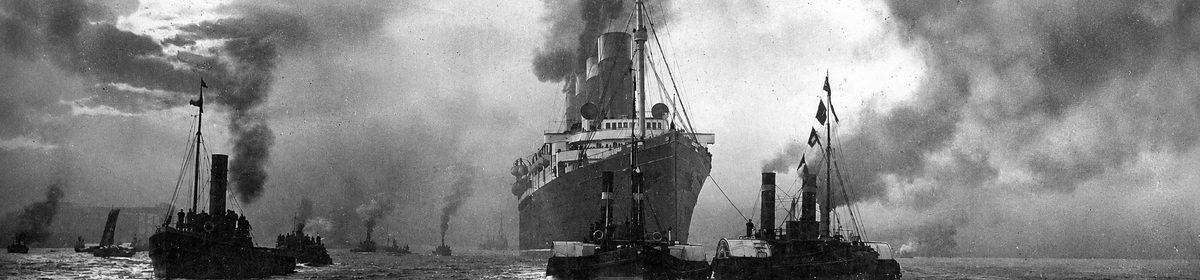
SS Normandie: The Most Beautiful Liner Ever Built

This may be the most elegant and well-designed ocean liner ever built. People could walk around her and simply stare. For me, not counting the Edwardian era (Olympic, Mauretania, etc.), the Normandie, SS United States, and Île de France are probably my favorite liners from the 1920s onward. I would still pick the Olympic for my tastes, but the consensus among “ship people” is that this ship had everything, and it’s hard not to agree. The French had some of the most beautiful ships.

I hope you don’t mind a lot of pictures. She deserves them.

The SS Normandie was France’s answer to the great ocean liners of the 1930s. She was launched in 1932 and entered service with the French Line in 1935. Four years before she began sailing, the SS L’Atlantique (more on her later) had already offered passengers a glimpse of the Art Deco future. The Normandie took those ideas and built an entire ship around them.

At 1,029 feet long, she was the first ocean liner to exceed 1,000 feet. Her hull was designed by Vladimir Yourkevitch, a Russian-born naval architect whose unusual bow helped the enormous ship move through the water efficiently. Her steam turbines did not turn the propeller shafts directly. Instead, they powered generators that supplied electricity to four enormous motors, one for each propeller.

She was more than a beautiful ship. She was one of the most technologically advanced liners of her time.

Her interiors were the part that people remembered. The first-class dining room was 305 feet long, rose three decks high, and was longer than the Hall of Mirrors at Versailles. Lalique glass, bronze, sculptures, murals, and carefully designed lighting turned the ship into a floating exhibition of French art. She also had a theatre, winter garden, chapel, indoor swimming pool, and first-class apartments with private dining rooms and terraces.

A ship this elaborate depended on more than architects and decorators. More than 1,300 crew members kept her operating. The French Line expected the ship to represent the best of France on every crossing. That meant French food, polished service, spotless public rooms, and an experience intended to rival the finest hotels in Paris.

The Normandie made her maiden voyage from Le Havre to New York in May 1935. She crossed in a little more than four days at an average speed just under 30 knots, taking the Blue Riband from the Italian liner Rex. She also broke the eastbound record on her return voyage.

There were problems. Passengers noticed serious vibration near the stern when the ship traveled at high speed. During a refit, her original three-bladed propellers were replaced with four-bladed ones, greatly reducing the vibration. The refit also increased her measured tonnage, allowing France to continue calling her the largest liner in the world after Britain’s Queen Mary entered service.

The rivalry between the two ships became one of the greatest in ocean-liner history. The Queen Mary took the speed record in 1936. The Normandie reclaimed it in 1937, only for the British ship to win it again the following year.

The French ship may have been the more beautiful of the two, but the Queen Mary proved more practical and commercially successful. The Normandie devoted an enormous amount of space to first class and was expensive to operate during the Great Depression. She was famous around the world, but fame did not always fill her cabins.

During her short career, Normandie carried some of the most famous people of the era. Ernest Hemingway, Fred Astaire, James Stewart, Marlene Dietrich, Walt Disney and the real von Trapp family all crossed the Atlantic aboard her. Disney sailed on her in 1935, while James Stewart was aboard her final peacetime crossing in August 1939. For a ship that spent only four years in regular service, she accumulated an extraordinary passenger list.

When World War II began in September 1939, the Normandie was safely tied to Pier 88 in New York. She had arrived on August 28 and would never sail again.

For a short period in 1940, the Normandie, Queen Mary, and the new Queen Elizabeth were docked beside one another in New York. The three largest liners in the world sat together while Europe descended into war. The two British ships eventually departed and became troopships. The Normandie remained behind.

After the United States entered the war, the government took possession of her. The Navy renamed her Lafayette and classified her as the transport AP-53, although she was never commissioned. Workers began converting the former luxury liner into a troopship like the other two.

On February 9, 1942, sparks from a cutting torch ignited a pile of kapok-filled life preservers inside a former first-class public room. The fire spread quickly. The ship’s original firefighting system had been disrupted during the conversion, and some American fire hoses could not connect to her French fittings.

Fireboats and crews on the pier poured thousands of tons of water into the ship. By evening, the flames were largely under control, but the water was not distributed evenly. The Lafayette developed an increasing list to port.

Vladimir Yourkevitch came to the pier and offered his knowledge of the ship, but he was not placed in control of the effort. During the early hours of February 10, the great liner slowly rolled onto her side in the mud beside Pier 88.

One man died. Frank “Trent” Trentacosta, a 36-year-old member of the fire watch, was killed, while hundreds of workers, sailors, and firefighters required treatment for injuries, burns, smoke inhalation, or exposure.

Rumors of sabotage spread quickly, especially because the United States had entered the war only two months earlier. The official investigation found something less dramatic but just as damaging: careless work, divided authority, poor coordination, and no unified command aboard the ship. The Normandie had not been destroyed by one unavoidable event. She had been lost through a chain of preventable failures.

Salvage crews spent more than a year removing her damaged upper works and carefully righting the hull. By August 1943, she was upright and floating again. There were proposals to restore her or find another military use, but the cost was enormous and the war had moved on without her. She was sold for scrap in 1946.

William Francis Gibbs later designed the SS United States with an almost obsessive concern for fire protection. Combustible materials were kept to an absolute minimum. Gibbs had admired the Normandie, traveled aboard her, and examined her machinery. When his own great liner finally appeared, it combined speed and beauty with lessons the maritime world had learned the hard way.

The saddest part of the Normandie’s story is that passengers who sailed aboard her in 1938 and 1939 had no idea they were experiencing the end of an age. People dressed for dinner, danced to orchestras, and watched the Atlantic pass outside the windows. Within months, Europe was at war, and the glamorous world the ship represented had vanished.

I think what makes the Normandie different is that she never had one defining tragedy at sea. Instead, she represented the very best of an age that disappeared almost overnight. Her passengers enjoyed some of the final peaceful crossings before World War II. Her crew spent years making her one of the finest ships ever built. The people who watched her burn weren’t watching just another ship. They were watching the end of an era.

Sometimes history isn’t lost in the middle of the ocean. Sometimes it slips away while tied safely to the dock. This will not be the last French liner to have such a fire, and it wasn’t the first.

Home movies on the Normandie. Passengers playing deck tennis aboard Normandie. The popular liner game combined tennis with quoits, using a rubber ring thrown across a net.

RMS Mauretania: Queen of the Atlantic

Every ship has a soul, but the Mauretania had one you could talk to. Franklin Delano Roosevelt.

In 1935, President Roosevelt donated his own large-scale model of the RMS Mauretania to the Smithsonian Institution, where it remains part of the maritime collection. And now another one of Max’s love letters to these wonderful ships.

Her sister was Lusitania; the minute she sank, she became a legend. After her sister sank, Mauretania just kept working and working. There is a parallel to the RMS Olympic, which became a runner-up to her sister, Titanic. Both the Olympic and Mauretania were great ships and worked for decades, unlike their more famous sisters. The ship’s interior is incredible. There are many pictures of this one because she sailed into the 1930s after being launched in 1906. The Edwardian period had great tastes in decor.

The RMS Mauretania was the fastest passenger liner in her era, bar none. She and her sister, RMS Lusitania, would swap out as the fastest ships, but Mauretania would take the record, as we will see. She was built for the Cunard Line during a time when ocean liners were becoming symbols of national pride. Launched in 1906 and entering service in 1907, she was designed to compete with the great German liners that were dominating the Atlantic. Along with her sister ship, she represented the latest in shipbuilding technology. She was powered by steam turbines, an innovation at the time, and quickly proved herself to be one of the fastest ships in the world.

After Cunard came out with Lusitania and Mauretania, White Star Line came out with Olympic, Titanic, and Britannic. The Cunard Line and White Star were something like the Apple and Microsoft of North Atlantic travel. They were enormous rivals, and every new ship was measured against what the other company had built. Beautiful ships came out of this competition.

Not long after entering service, Mauretania captured the Blue Riband (unofficial accolade given to the passenger ocean liner that achieved the fastest average speed on a regular crossing of the North Atlantic) for the fastest crossing of the Atlantic. She held the record for more than twenty years! That is an achievement that has never been matched. Passengers were impressed not only by her speed but also by her comfort. Her interiors featured grand public rooms, elegant dining areas, and luxurious accommodations. For many travelers, sailing on Mauretania was just as much about the experience as it was about reaching New York. At the time, she was just as famous as her sister.

When World War I began, Mauretania’s career changed dramatically. Like many large liners, she was called into government service. She served as a troopship and later as a hospital ship. During the Gallipoli campaign and other military operations, she transported thousands of soldiers and wounded personnel. Mauretania survived the war and returned to civilian service.

After the war, Mauretania returned to carrying passengers across the Atlantic and remained popular with travelers. In 1927, she carried Leonard and Phil Chess, two Polish immigrant boys who later built Chess Records. Four years later, Charlie Chaplin sailed aboard her alongside Malcolm Campbell, who had just set a new land-speed record in his Blue Bird automobile. When Mauretania reached Southampton, Campbell learned that King George V had approved his knighthood.

In June 1922, the Marx Brothers crossed the Atlantic aboard the Mauretania on their way to their first British tour. Groucho, Harpo, Chico, and Zeppo were aboard, years before Hollywood made them household names. They returned to New York aboard White Star’s Cedric the following month.

However, newer ships were beginning to appear. Vessels such as the German Bremen and Europa were faster and more modern. By the early 1930s, Mauretania was showing her age. Although still admired, she could no longer compete with the newer generation of liners entering service.

In 1935, after nearly three decades on the Atlantic, Mauretania was retired and sold for scrap. Many people were saddened by the news. Crowds gathered to see her one last time as she made her final voyage. Today, she is remembered as one of the greatest ocean liners ever built. She combined speed, reliability, and elegance in a way few ships ever have. For many maritime historians, the Mauretania represents the high point of the great Edwardian liners and a time when crossing the Atlantic by ship was an adventure in itself.

Among the small group aboard for Mauretania’s final voyage was an unnamed couple who reportedly had spent their honeymoon on her maiden voyage in 1907. Nearly 28 years later, they returned to say goodbye to the ship that had helped begin their married life. I just found someone who could have been the husband. J. S. Williamson of Kirkcudbright reportedly honeymooned aboard Mauretania; he purchased a house flag at the 1935 auction. Possible connection to the farewell-voyage couple, unconfirmed.

Olympic was the reliable old friend.

Mauretania was the reliable old friend who raced you home.

A very sad picture. The two were fierce rivals for 24 years, Olympic and Mauretania, heading toward the scrapyard. Olympic is on the left and Mauretania on the right. I’ve come to hate this picture because they should be hotels/museums today, not scrapped and lost to history.

SS Île de France: The Saint Bernard of the Seas

My kind of ship! She earned this title due to her numerous rescue operations at sea. This was one beautiful ship and is remembered for all the right reasons. What a time for ocean travel. It was effectively the “jet-set” before the jet. The ocean liners took people across the ocean in style. Celebrities would ride them back and forth, much like seventies rock stars did on jets, to be with their famous friends and have new adventures. So today we will take a look at a great ocean liner that was a hero to many.

The SS Île de France was one of the great French ocean liners of the 20th century. Built for the French Line, she entered service in 1927 and quickly became known for something other than speed records. While ships like the White Star liners and Cunard’s express liners competed for the Blue Riband (an unofficial award for the fastest crossing of the Atlantic), SS Île de France became famous for her elegance, Art Deco interiors, and later, her remarkable rescue work at sea. Passengers loved her modern style, and she helped establish France as a major player in transatlantic travel during the years between the World Wars.

When World War II began, her civilian career was interrupted. Like many liners of the era, she was converted into a troopship and carried thousands of soldiers during the conflict and traveled over 400,000 miles. After the war, she was extensively rebuilt and returned to passenger service in 1949. The postwar years were among her most successful. She once again carried travelers between Europe and North America and became one of the most recognizable ships on the Atlantic.

In 1953, she rescued the crew of the Liberian freighter Greenville, getting 25 out of the 26 crewmen. Her finest hour came in July 1956 after the collision between the Italian liner SS Andrea Doria and the Swedish liner MS Stockholm. Upon receiving the distress calls, Île de France altered course and rushed through the night toward the disaster scene. Her crew worked tirelessly to take hundreds (over 750) of survivors aboard from lifeboats. In total, she rescued more people than any other ship involved in the operation. The sight of her brightly illuminated sign arriving out of the darkness brought hope to frightened survivors who had spent hours waiting on the cold Atlantic.

Because of that rescue, Île de France earned the nickname The Saint Bernard of the Seas; it was a fitting title. Long after her days as a luxury liner were forgotten, people remembered how she answered the call when it mattered most. She remained in service until 1959, when she was retired and eventually scrapped, but her legacy lives on as one of the great rescue ships in maritime history. Celebrities also loved this ship. Bogart and Bacall, Joan Crawford, Errol Flynn, Alan Ladd, Lena Horne, Rita Hayworth, Ernest Hemingway, Marlene Dietrich, and more. One more I will add selfishly because he is my favorite filmmaker…Buster Keaton.

In November 1934, comedian Buster Keaton returned from Europe aboard the Île de France. Keaton had traveled overseas to make the French film Le Roi des Champs-Élysées at a time when Hollywood had nearly discarded him. He reportedly crossed to Europe aboard a freighter to save money, but he came home in considerably better style. During the return crossing, Keaton even demonstrated his famous ability to escape from a straitjacket.

After she retired from passenger service, part of her final career was in the 1960 film The Last Voyage. The producers needed a large ocean liner that was about to be scrapped so they could stage realistic scenes of a ship in distress. The Île de France fit the bill.

However, there was one catch. The owners did not want the famous French liner portrayed as sinking on screen. So the filmmakers changed the ship’s identity for the movie. They painted over her name and transformed her into the fictional liner Claridon. During filming, they flooded compartments, smashed interiors, and staged explosions and damage to the once great ship.

If you see some pictures of her with 3 funnels and then two, there is a reason. After the war, when she was restored to an ocean liner, she went from 3 funnels to two shorter ones.