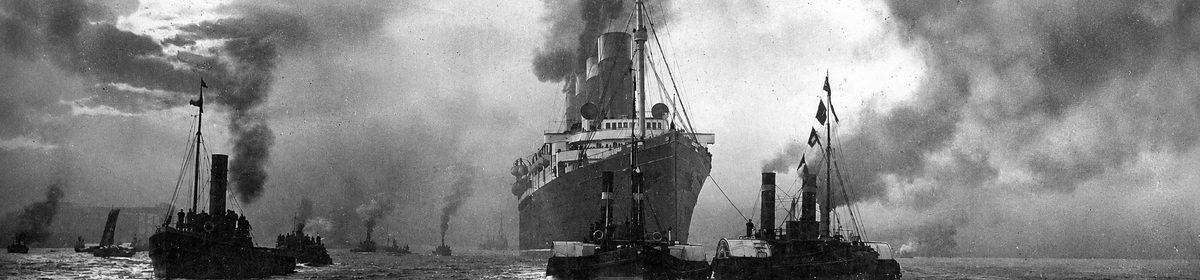
SS Columbia: The Ship That Proved Edison Right

In 1880, a passenger steamship named the SS Columbia was launched in Chester, Pennsylvania. She was built for the Oregon Railway and Navigation Company, and she was intended to carry passengers and freight between San Francisco and Portland. Her lasting claim to fame, however, came after the company’s president, Henry Villard, witnessed Thomas Edison’s New Year’s Eve demonstration at Menlo Park. Villard was fascinated by Edison’s new incandescent lighting system and decided to have it installed aboard his new ship. The Columbia became the first commercial installation of Edison’s system. I want to thank Jim Adams for a post about electricity that spurred me on to finish this.

In the spring of 1880, Edison’s incandescent light was still largely experimental. His team now had to install delicate glass bulbs, primitive wiring, and early dynamos aboard a ship that would constantly pitch, roll, and vibrate. Dampness and salt air presented additional problems. It was one thing to make electric bulbs glow during a demonstration at Menlo Park. It was another to keep them burning aboard a steamship traveling around South America.

Edison entrusted the shipboard installation to a team that included his associate Francis Upton. The men ran insulated wiring through the passenger spaces and connected more than one hundred lamps to dynamos below. On May 2, 1880, the system was tested in New York, and electric light filled the ship’s saloon and cabins. Passengers could not operate the cabin lights themselves; a steward controlled each one from a locked rosewood box outside the room. The system had worked at the pier. Now it had to survive a ten-week voyage around South America.

When she set sail on her maiden voyage from New York to Portland, Oregon, she was a floating wonder. The route required sailing all the way around South America, as the Panama Canal did not yet exist. During a stop in Rio de Janeiro, the Emperor of Brazil even climbed aboard just to witness the spectacle of her glowing electric interior. The voyage was a massive success; Edison’s dynamos performed flawlessly, and the ship proved to the world that electric lighting was safe and practical for everyday use.

For the next 27 years, the SS Columbia became a reliable ship of the Pacific Coast, carrying passengers and cargo between Portland and San Francisco. She braved the rough storms and even earned a reputation for heroism, rescuing survivors from the wreck of the SS Alaskan in 1889. She was a symbol of progress, smoothly bridging the gap between the old world of wooden sailing ships and the new era of steel and electricity. She was also at a dock in the 1906 San Franciso Earthquake (you can see her listing in the pictures below) but survived.

Her fate would change on a dense, foggy night on July 21, 1907. While navigating off the coast of Shelter Cove, California, the SS Columbia had a lumber schooner named the San Pedro coming at her. Both ships were going at an unsafe speed through the fog. Before Captain Peter Doran could steer clear, the San Pedro crashed directly into the Columbia’s starboard side. The San Pedro’s bow tore deeply into the Columbia’s starboard side, opening her hull to the sea. Water poured in rapidly, and the steamship began settling by the bow.

The collision jolted sleeping passengers awake and sent them rushing onto a sharply listing deck. Outside, darkness and thick fog concealed both the surrounding water and any ships that might be close enough to help. Captain Doran remained at his post while crew members and passengers tried to lower lifeboats, distribute life preservers, and throw anything that could float into the sea. Some boats were launched, but the Columbia sank too quickly for all of them to be used.

Captain Doran showed immense bravery. He stayed on the bridge, refusing to leave his post, and shouted instructions through the dark to help lower the lifeboats until the ocean rose up and carried him away. The crew and several heroic passengers worked entirely by touch. They frantically untied lifeboats, handed out life jackets, and threw anything that could float into the sea. Only a few lifeboats were successfully launched before the ship’s angle became too steep.

As the bow sank deeper, the stern of the Columbia lifted high into the air. Terrified passengers clung to the deck railings until they could no longer hold on. In roughly 8-10 minutes after the collision, the steamship slipped beneath the waves. Surviving passengers and crew were left floating in the freezing, foggy void, clinging to overturned boats, deck chairs, wooden doors, and wreckage, waiting in the dark to see if anyone would rescue them.

There were 251 aboard the ship. Tragically, 88 people lost their lives in the disaster. 163 people survived the sinking and were successfully pulled from the ocean. Three ships helped to rescue the Columbia’s passengers. Three ships took part in the rescue. The San Pedro, the vessel that had struck the Columbia, became an unexpected refuge. Her large cargo of redwood lumber helped keep her damaged hull afloat, and approximately eighty survivors reached or were pulled aboard her. The steamships George W. Elder and Roanoke also arrived and assisted at the scene. The George W. Elder took survivors aboard and later helped tow the damaged San Pedro toward shore.

A ship famous for bringing light to the sea was ultimately lost in darkness and fog.

The San Pedro after the collision… I don’t know how she made it, but she survived the collision. I can’t believe she was floating at this point!

SS Princess Alice: Tragedy on the Thames

Yes, this is another sinking, but what the passengers found themselves in after the ship went down is something no one should ever experience. I said it in my Mark Twain post, and I can’t say it enough: maritime regulations are written in blood. The sinking of the SS Princess Alice is another painful reminder of that truth. It also reminds us that some disasters are made worse not just by what happens on the water, but by conditions that should have been addressed long before tragedy struck.

On September 3, 1878, the crowded passenger paddle steamer was returning to London after a day excursion along the Kent coast. Some children were asleep, and a band was still playing as the ship rounded Tripcock Point near dusk. Then the Princess Alice and the much larger collier Bywell Castle suddenly found themselves on a collision course.

The iron bow of the Bywell Castle struck the Princess Alice near her starboard paddle box. The smaller ship broke apart and sank in about four minutes. Passengers were in the water before many of them understood what had happened.

The investigations did not produce one simple answer. The coroner’s jury found that both vessels had contributed to the collision. The Board of Trade blamed the Princess Alice for failing to follow the proper navigation rule, while the High Court later held both ships responsible.

Although the Bywell Castle survived the collision, her crew immediately turned their attention to rescuing survivors from the Thames. They were joined by police, watermen, dock workers, and ordinary citizens who rushed to help. In disasters like this, history often remembers the ships, but it should also remember those who risked their own lives trying to save people they had never met.

The ship went down at the point where enormous amounts of untreated sewage and industrial waste from London entered the Thames. About an hour before the collision, nearby outfalls had released an estimated 75 million imperial gallons of untreated sewage, about 90 million U.S. gallons, into the Thames.

Survivors found themselves struggling not only in the water but in what contemporary accounts described as foul, polluted sludge. Some survivors who were pulled from the river later died after swallowing the polluted water. Several survivors who were pulled from the river later died from swallowing the sewage water. Between 600 and 700 people died. They didn’t keep a correct ship manifest, so the exact number is not known.

That tragedy had consequences far beyond the sinking itself. It shocked Victorian Britain and added urgency to efforts to improve London’s sewage and public health systems. In other words, the Princess Alice wasn’t just a maritime disaster; it became part of the story of modern sanitation.

The collision put hundreds of passengers into the Thames. Years of neglect made the river itself part of the disaster. After this, things started to change and raw waste would not go into the river. London built purification and treatment facilities directly at the existing Barking (Northern Outfall) and Crossness (Southern Outfall) pumping stations.

PS General Slocum: New York’s Forgotten Tragedy

St. Mark’s Evangelical Lutheran Church chartered the PS General Slocum for its annual outing on June 15, 1904. It was a tradition that families in New York’s German neighborhood looked forward to every year. Mothers and children dressed for a day. They carried food, greeted friends, and walked toward the East Third Street pier. A band was waiting aboard the ship.

To the families stepping onto her decks, the General Slocum looked ready for them. She was a large and familiar excursion steamer with three decks, electric lights, and a brightly decorated interior. She had carried thousands of passengers around New York Harbor.

The General Slocum had passed a government safety inspection only weeks earlier. On paper, she was ready to carry passengers. She wasn’t. Her fire hoses were old and rotten. Her lifeboats were secured in place and would prove impossible to launch. Many of her life preservers were thirteen years old. The crew had never held a proper fire drill. Everything needed to save the passengers appeared to be aboard the ship. Almost none of it could be trusted.

The families now filling her decks knew none of this. To them, the General Slocum was simply the ship that would carry them away from New York City for a day. The neighborhood was known as Kleindeutschland. German immigrants had built churches, shops, clubs, and homes there. On that Wednesday morning, families from St. Mark’s Evangelical Lutheran Church were preparing for their annual Sunday school picnic. For many of them, it was one of the happiest days of the year. The ship filled up with passengers, predominantly women and children, to have a great day out.

The General Slocum left the East Third Street pier at about 9:30 that morning. Roughly half an hour later, as she passed East 90th Street and approached the dangerous waters of Hell Gate, smoke began rising from below the main deck.

The exact cause of the fire was never established. It appears to have started in or near the lamp room, where straw, oily rags, and lamp oil gave the flames plenty of fuel. A discarded match or cigarette may have started it, but no one could say for certain.

One of the first warnings reportedly came from a teenage passenger named Frank Perditski. After noticing smoke, he rushed into the pilothouse and tried to alert Captain William Van Schaick. The captain was concentrating on navigating Hell Gate and dismissed him. Another boy warned a deckhand, who stopped to investigate before notifying the mate. The mate then went to see the fire for himself before carrying the warning to the bridge. By the time Van Schaick received an official report, several valuable minutes had been lost.

The fire spread rapidly through the wooden ship. Some mothers placed life preservers on their children, believing they would keep them afloat, only to see them sink in the river. Many of the preservers were thirteen years old. Their canvas coverings split apart and released cork that had deteriorated into powder.

The clothing worn at the time made escape even harder. Women often wore long dresses, petticoats, corsets, and heavy shoes. Once soaked, those clothes became tremendously heavy. It is a detail easily overlooked today, but it contributed to the loss of life in this and other maritime disasters of the period.

After receiving the official warning, Van Schaick ordered full speed ahead. Within approximately thirty seconds, he directed the pilot toward North Brother Island. Investigators later faulted him for passing closer places where the ship might have been beached. Van Schaick maintained that he feared setting fire to waterfront buildings and oil tanks and believed North Brother Island offered the safest landing. Whatever his intentions, the ship’s speed and the headwind drove the flames toward the crowded stern.

When the burning ship reached North Brother Island, doctors, nurses, and even patients from Riverside Hospital rushed to the shoreline. Mary McCann, a teenage patient recovering from illness, entered the water and reportedly helped save several children.

Help also came from nearby Rikers Island. Two prisoners, John Merther and Dan Casey, persuaded their supervisor, Dr. Nathan E. Broder, to take them across in a rowboat. The three repeatedly pulled victims from the river, carried them to North Brother Island, and returned for more until they were too exhausted to continue.

Tugboats, fireboats, police boats, and private vessels converged on the scene. Several tug crews pressed their boats against portions of the Slocum that had not yet been consumed, allowing passengers to jump onto their lower decks. Others pulled survivors from the water as the burning ship came to rest against the island.

The exact number aboard and the final casualty count vary among historical sources. The figures most often given are 1,021 dead and only 321 survivors. Most of the victims were women and children.

The disaster devastated Kleindeutschland. Widowers and surviving families moved away, and some people reportedly took their own lives under the weight of their grief. The neighborhood was already changing, but the loss of so many families accelerated its decline. Although most of those aboard were German American, Jewish and Italian New Yorkers were also among the dead.

The investigation uncovered one final betrayal. Some of the cork supplied for life preservers had been mixed with cheaper granulated material. Pieces of iron had been inserted to bring the cork blocks up to the required weight. The devices had been made to satisfy an inspection requirement on paper, not necessarily to keep someone alive in the water. Managers of the cork company were indicted, but none was convicted.

There was enough blame to go around. Captain Van Schaick carried responsibility for the lack of fire drills and for never discovering that the equipment aboard his ship could not be trusted. The owners had failed to maintain and replace that equipment. Government inspectors then gave the public confidence in an unsafe ship by certifying her only weeks before the disaster. None of them needed to be a villain. The system allowed each of them to behave as though someone else had checked. Sometimes that is all it takes for a disaster to happen.

Ships do not have to be perfect. Neither do people. But when lives depend on safety equipment, “good enough” is not good enough. The passengers aboard the General Slocum trusted that the hoses would work, the lifebelts would float, and the inspection meant something. They deserved better!

The General Slocum disaster remains the deadliest maritime disaster in New York City history. Until September 11, 2001, it was the deadliest man-made disaster the city had ever experienced. Yet most people have never heard of it.

Today, the Slocum Memorial Fountain stands in Tompkins Square Park. Carved into its pink marble are the faces of two children and the words:

“They were Earth’s purest children, young and fair.”

RMS Olympic: Old Reliable

If I could snap my fingers and have any ship alive and well today? The RMS Olympic would be it! There was a reason my first real post was The Three Sisters. The ship survived and served passengers and the WWI effort for 24 years.

Before the Titanic’s maiden voyage, it was actually the RMS Olympic that was White Star Line’s best-known and most celebrated liner. She had already established her reputation with passengers and the public. Only after the Titanic disaster did history forever shift the spotlight to her younger sister. While Titanic became the legend, Olympic became the ship that proved the design could succeed.

I’ve grown to love this ship even more than her almost twin younger sister, Titanic. Olympic never sank. She survived World War I and returned to passenger service afterward, sailing for nearly twenty-four years. In many ways, she became everything the Olympic-class ships were meant to be. She carried thousands of American and Canadian troops during the war and quietly earned the nickname “Old Reliable.” The press had called Titanic “unsinkable,” but Olympic was the ship that truly lived up to that reputation.

She didn’t become famous because she sank. She became famous because she didn’t. To me, she is the most beautiful ocean liner ever built. She isn’t flashy. She is simply regal and timeless. Others like the Normandie and the SS United States were beautiful, but Olympic’s outward appearance was hard to beat.

The White Star Line built the RMS Olympic because they were locked in a battle with the Cunard Line in the early 1900s. Cunard had shocked the shipping world with the fast and luxurious RMS Lusitania and RMS Mauretania. Those ships held the speed records of the Atlantic and became symbols of British pride. White Star knew they could not win by building the fastest ships. They would create huge liners built around comfort, size, and luxury instead of outright speed. That idea became the Olympic-class ships, Olympic, Titanic, and later Britannic.

When Olympic entered service in 1911, people were stunned by her size. She had grand staircases, elevators, electric lights, Turkish baths, a swimming pool, a gymnasium, and first-class rooms that looked more like expensive hotels. Even second-class accommodations were considered better than first-class on many older ships. White Star advertised her as a steady and comfortable ship for wealthy travelers and immigrants alike. She was not designed to break speed records. She was designed to make passengers feel safe and relaxed crossing the Atlantic. That was her selling point. While Lusitania and Mauretania were faster, they were also known for rolling in rough seas. Olympic was built for comfort, and passengers appreciated the smoother ride. She had quite a few captains in her career. Captain Edward John Smith was the first captain and later would go to captain the Titanic.

After the loss of the RMS Titanic in 1912, Olympic suddenly carried a heavy burden. Many people feared that the Olympic-class ships were cursed or unsafe. But Olympic slowly rebuilt public confidence. She returned to service with major safety improvements, including more lifeboats and a strengthened double hull. She then became a war hero. Olympic was converted into a troopship during World War I. If you’d like to learn how passenger liners were transformed for military service, see our companion page: From Luxury to War: How Ocean Liners Became Troopships.

During World War I, she served as a troopship and carried thousands of soldiers across dangerous waters. In 1914, she spotted HMS Audacious, a battleship that was sinking. She stopped and risked being hit by a U-boat to rescue over 200 sailors. For a more complete story, go to the companion page. She even rammed and sank a German U-boat in 1918, something almost unheard of for a passenger liner. A reconstructed animation of this event is at the bottom of the page. She was also dressed up in her Dazzle Paint (She looked like a sixties rock band logo).

She kept sailing while many famous ships disappeared through war, accidents, or financial trouble. Passengers trusted her. Crews respected her. She crossed the Atlantic hundreds of times and carried everyone from immigrants to celebrities. In many ways, Olympic became the ship White Star had hoped for from the beginning: dependable, elegant, and respected. She even became something of a movie star, appearing in several films that can still be seen today. Among her passengers were Charlie Chaplin, Mary Pickford, Douglas Fairbanks, Prince Edward, Cary Grant, Marie Curie, and many others. The Olympic ended up completing 257 round trips across the Atlantic (not counting the war) and traveled over 1.8 million miles.

On November 18, 1929, while crossing the North Atlantic near the resting place of her sister, the Titanic, Olympic experienced an unusual vibration that ran through the entire ship. At the time, no one knew why. The answer came later: she had been near one of the largest undersea earthquakes ever recorded in the North Atlantic. It was a strange coincidence that forever linked the two sisters once again, not through tragedy this time, but through one of nature’s most powerful events.

Among Olympic’s crew was stewardess Violet Jessop, who was aboard during the 1911 collision with HMS Hawke. She later survived the sinking of Titanic as a stewardess and Britannic as a wartime nurse. Depending on how you look at it, Jessop was either the unluckiest woman ever to work at sea, or the luckiest.

By the mid-1930s, Olympic was still a wonderful ship, but the world around her had changed. The Great Depression hurt the shipping business badly. Fewer people could afford ocean travel. Newer ships were also coming along that were faster and more modern. White Star Line was struggling for money and merged with Cunard in 1934. Olympic was already over 20 years old by then. Even though she was still running well, she cost a lot to operate and still had steam engines. In the end, the company decided to scrap her in 1935. It shocked many people because she had survived collisions, wartime service, bad storms, and decades at sea. To many, she still seemed full of life. Even in retirement, Olympic continued to serve. Her dismantling at Thomas W. Ward’s scrapyard in Jarrow provided nearly two years of employment during the depths of the Great Depression.

It’s easy to imagine what might have been. Had Olympic been preserved like the Queen Mary, millions of people could have walked her decks and experienced the closest thing to sailing on the Titanic. But forget the Titanic; it’s the friggin Olympic! But those were the years of the Great Depression, and preserving a ship wasn’t a realistic option. You cannot look at things like that with presentism. Even so, Olympic still lives on. Parts of her survive today! She is in the White Swan Hotel, where her beautiful wood paneling, windows, and fixtures continue to be admired. In a small way, the ship still welcomes guests and is not a museum piece. Parts of her are still working after over 100 years.

If I could travel back in time and sail on any ocean liner, Olympic would be my choice. Others were faster. Some were even more luxurious. But I would choose the ship that quietly did her job for nearly a quarter of a century and earned the nickname Old Reliable. I can’t think of a finer legacy than that.

Olympic wearing her World War I DAZZLE paint camouflage. The bold geometric patterns weren’t meant to hide the ship. They were designed to make it more difficult for German U-boat commanders to judge her speed, course, and heading through a submarine periscope.

A 30-minute short documentary of Olympic

SS Kamloops: One of Lake Superior’s Enduring Mysteries

I want to tell everyone, I’m off on Labor Day on Monday, so I’ll be posting about my favorite ship of all time. It served 24 years in passenger service and in War.

I first heard about this ship when I saw some divers go into it. It’s almost pristine. Lake Superior has preserved this ship almost perfectly. It had a cargo of Lifesavers and toothpaste among other items. The labels look like they were printed yesterday, although it sank in 1927. I just heard a phrase on a documentary: “the ocean is a liquid archive.” It really is; it holds the answers to mysteries that we will never know. Although this didn’t happen in the ocean, the meaning is the same.

The SS Kamloops was built in 1924 in England for Canada Steamship Lines. She was a smaller freighter made for the old canal system before the St. Lawrence Seaway changed Great Lakes shipping forever. Most of her work was hauling cargo across the Great Lakes. Coal, machinery, food, and supplies filled her holds during her short career. By December 1927, the shipping season was almost over. Lake Superior was already turning dangerous with ice, snow, and freezing winds moving in across the water.

On December 6, 1927, the SS Kamloops left Port Arthur, Ontario, headed for Fort William, which is now Thunder Bay. She carried a crew of 22 souls. Not long after leaving, a massive winter storm swept across Lake Superior. Winds howled and ice built up on ships across the lake. Other captains later said it was one of the worst storms they had seen. The Kamloops vanished without sending a distress call. Search crews found bits of wreckage later, but the ship itself disappeared into the cold water of Superior. For nearly 50 years, nobody knew exactly where she rested.

When the SS Kamloops disappeared in a Lake Superior storm in December of 1927, many assumed that all 22 people on board went down with the ship. The crew included two women, stewardess Netty Grafton and assistant stewardess Alice Bettridge. For months there was no sign of the vessel. Then, when spring arrived, wreckage and bodies began washing up on Isle Royale. What investigators found suggested that at least some of the crew survived the sinking itself.

Several bodies were discovered on the island along with pieces of a lifeboat and oars. Some of the victims were wearing life preservers. This led many to believe that a group had managed to abandon the ship and reach shore. One body believed to be First Mate Henry Genest was found inland from the beach. That detail has always stood out. It suggests that he may have survived long enough to leave the shoreline and search for shelter before succumbing to the cold.

One of the crew members found was Alice Bettridge. Her story became even more tragic when a bottle containing a message was reportedly found on the Canadian shore of Lake Superior. The note was said to have been written by Alice. She said, “I am the last one left alive, freezing and starving to death on Isle Royale in Lake Superior. I just want Mom and Dad to know my fate.” Whether every detail of the story can be proven today is debated, but her parents said it was her handwriting. Netty Grafton is thought to still be in the Kamloops.

The most accepted theory today is that several crew members escaped the sinking and reached Isle Royale alive. They found themselves stranded on a remote island during one of the harshest times of the year. With little shelter, little food, and no way to call for help, they eventually died from exposure. It is one of the saddest stories on Lake Superior. They survived the storm and the sinking, only to lose their lives on land.

50 years later, in 1977, divers finally found the wreck near Isle Royale. The ship sat deep underwater and was still in surprisingly good condition because of the freezing temperatures. The Kamloops soon became one of the most talked-about wrecks on the Great Lakes.

Part of that came from the story of “Old Whitey” or “Grandpa,” the preserved body of one of the crew members that is still inside the engine room, floating around the room (Don’t worry, it will not be in the photos). Divers told stories for years about strange feelings around the ship. Ghost stories followed. But underneath all the legends is the real story. Twenty-two souls went out on Lake Superior in winter and never came home. That’s the important part. This sadly shows that no matter how many lifeboats, wireless equipment, and safety equipment you have, anything can happen.