

The main article will be published January 8, 2027
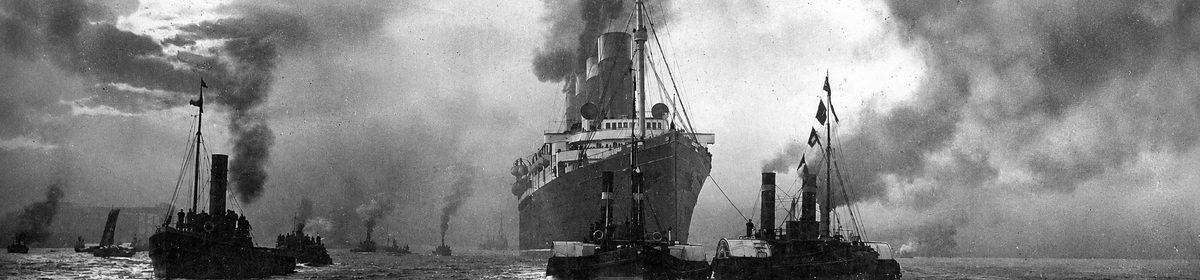
On October 2, 1942, the ocean liner RMS Queen Mary accidentally rammed and sank her escort, the light cruiser HMS Curacoa. Operating as a wartime troop transport nicknamed the “Grey Ghost,” Queen Mary was steaming toward Scotland carrying over 10,000 American soldiers from the 29th Infantry Division. She was traveling at around 28.5 knots and following a predetermined zigzag pattern intended to make her course harder for German submarine commanders to predict.
The danger developed as Queen Mary’s zigzagging course brought her close to the slower cruiser. Curacoa generally maintained a steady course, allowing the liner to overtake her while remaining nearby to provide anti-aircraft protection. Each bridge expected the other ship to keep clear.
During an earlier close encounter, officers aboard Queen Mary became concerned about their distance from the cruiser. Captain Cyril Illingworth instructed them to continue the zigzag, trusting the escort to stay out of the way. That maneuver ended safely, but roughly half an hour later the ships were converging again. Neither bridge acted soon enough to prevent the collision.
By the time the captains of both ships realized they were on an uncorrectable collision course, it was too late to maneuver the massive ships away. Traveling at full speed, the Queen Mary struck the HMS Curacoa directly midship. The liner’s sheer momentum and weight sliced straight through the cruiser’s armored hull, splitting the warship in two. The stern section sank almost instantly, while the bow went under just minutes later. “The Queen Mary sliced the cruiser in two like a piece of butter,” Alfred Johnson, a 22-year-old crewman on the Queen Mary, later said.
Under wartime instructions intended to protect her from submarine attack, Queen Mary continued onward rather than stopping to rescue survivors.. Consequently, the damaged liner had to steam away from the disaster, leaving hundreds of British sailors struggling in the cold North Atlantic waters. The soldiers on the Queen Mary threw life jackets and life rings into the water. Though she radioed accompanying destroyers to rescue survivors, 337 men from the Curacoa lost their lives, and only 101 were saved. To prevent a blow to Allied morale, the devastating incident was heavily censored and kept a strict secret from the public until after the war concluded. The initial judgment placed all responsibility on Curacoa. On appeal, responsibility was divided two-thirds to the cruiser and one-third to Queen Mary, a decision upheld by the House of Lords in 1949.
